After 20,000+ hours of coaching entrepreneurs, I can tell you exactly what separates coaching that works from coaching that wastes your money.
Business coaching for entrepreneurs is a crowded, often confusing market. Everyone with a LinkedIn profile and a motivational quote seems to call themselves a coach. After 20,000+ hours of executive coaching — ICF PCC certified, NLP Master Practitioner — I can tell you that most business coaching for entrepreneurs falls into two categories: life-changing or money-wasting. There is very little in between. According to the International Coaching Federation, businesses that invest in coaching see an average ROI of 7x their investment. But that is an average — the range is enormous depending on the quality of coaching.
This post is my honest assessment of what makes business coaching for entrepreneurs actually work, drawn from two decades of coaching experience and building businesses myself — including a 300-branch mortgage company, working at the Carlyle Group, and rebuilding from zero after 2008.
Types of Business Coaching for Entrepreneurs
Not all coaching is created equal. Here are the main types and what they are best suited for:
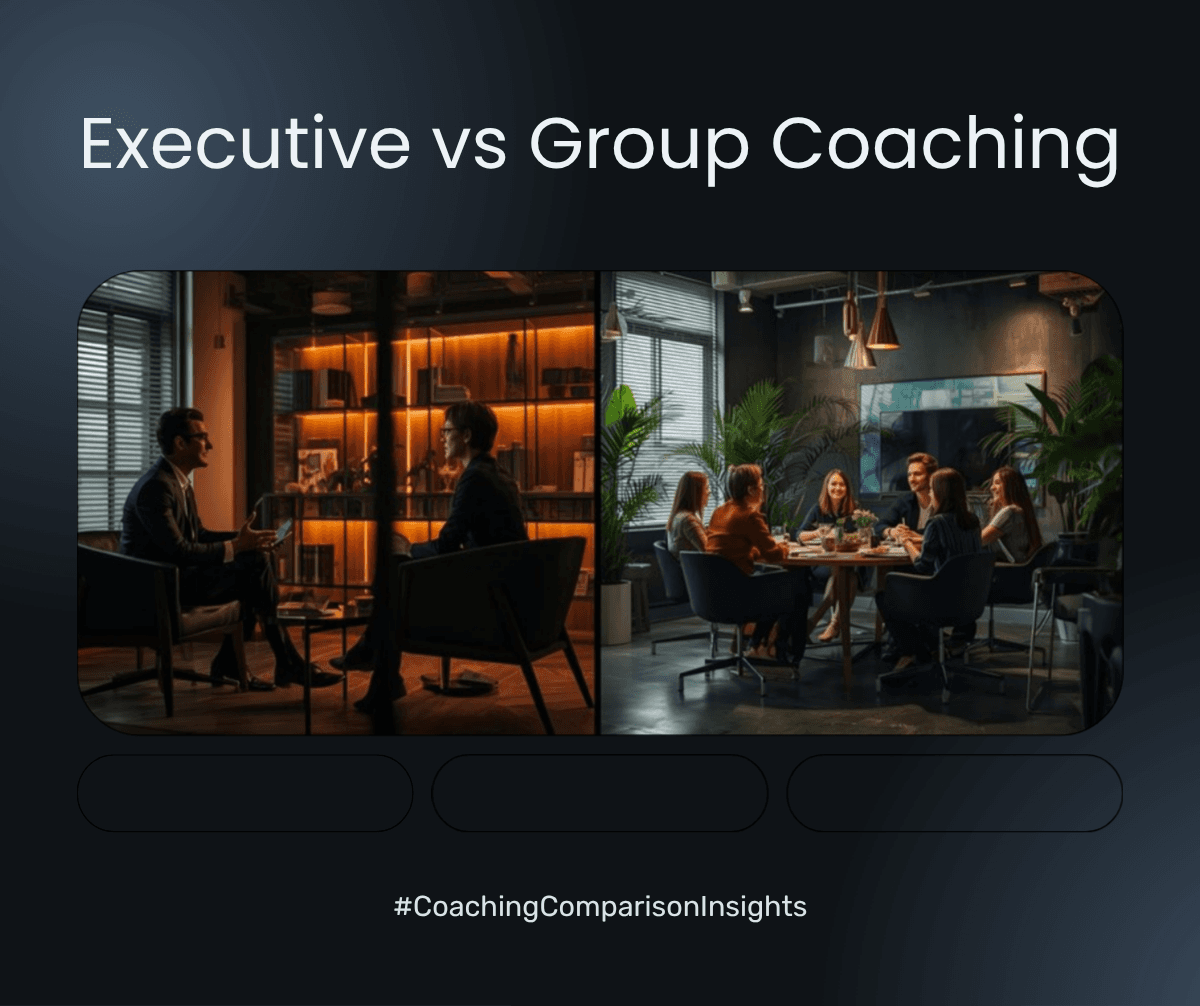
Executive Coaching
One-on-one, high-touch coaching focused on leadership, decision-making, and strategic thinking. Best for entrepreneurs at $500K+ in revenue who need to evolve as leaders to scale further. This is what I offer through our executive coaching service.
Group Coaching
A coach works with a small group (typically 5 to 15 entrepreneurs) in a structured program. Benefits include peer learning, accountability, and lower cost. Best for entrepreneurs in the $100K to $500K range. For a detailed comparison, read my post on executive coaching vs. group coaching.
Mastermind Groups
Peer-led groups with a facilitator. Less structured than group coaching but powerful for networking and diverse perspectives. Best for entrepreneurs who already have their strategy and need community.
Skills-Based Coaching
Focused on specific skills: YouTube growth, sales, marketing, operations. Best for entrepreneurs who know what they need to learn. Our YouTube strategy services fall into this category.
What Makes Business Coaching Actually Work
After coaching thousands of entrepreneurs, here are the five factors that determine whether coaching delivers results:

- Specificity: Coaching that works is specific, not generic. "Grow your business" is not a coaching outcome. "Increase monthly revenue from $50K to $100K in 12 months by building a YouTube lead generation system" is a coaching outcome. Specific goals lead to specific actions and measurable results.
- Accountability structures: The most common reason coaching fails is lack of accountability between sessions. Effective coaching includes regular check-ins, milestone tracking, and consequences for inaction. This is where AI automation can help — automated accountability check-ins between sessions keep momentum going (learn more about this in my AI automation for coaches post).
- Coach-client fit: The right coach for you is someone who has been where you want to go, understands your specific industry or challenge, and communicates in a style that resonates with you. Chemistry matters — you will be sharing your biggest fears and challenges with this person.
- Implementation support: Ideas without implementation are worthless. The best business coaching includes systems and frameworks that can be implemented immediately, not just inspiration. My philosophy — Systems Over Hustle — is built on this principle.
- Time horizon: Real business transformation takes 6 to 12 months minimum. Anyone promising overnight results is selling fantasy. According to Harvard Business Review, the most impactful coaching engagements last 12 to 18 months.
Red Flags: When Business Coaching Is a Waste
Here are the warning signs that a coaching program will not deliver results:
- No proven results: If a coach cannot show specific, verifiable results from past clients, walk away.
- One-size-fits-all: Your business is unique. Cookie-cutter programs rarely address your specific challenges.
- High pressure sales: Good coaches do not need to pressure you. The results speak for themselves.
- No relevant experience: A coach who has never built a business teaching you how to build a business is a recipe for generic advice.
- No structured methodology: Coaching should follow a proven framework, not just ad-hoc conversations.
- Guarantees of specific outcomes: No ethical coach guarantees results because results depend on your implementation.
Measuring the ROI of Business Coaching
Business coaching is an investment, and you should track the return. Here is how to measure coaching ROI:
- Revenue growth: Track monthly revenue before, during, and after coaching
- Time reclaimed: How many hours per week have you freed up through better systems and delegation? Read my post on how to delegate as an entrepreneur for the framework.
- Lead generation: Track leads per month and cost per lead across all channels
- Client acquisition cost: Are you acquiring clients more efficiently?
- Personal satisfaction: Are you enjoying your business more? This matters because burned-out entrepreneurs make bad decisions.
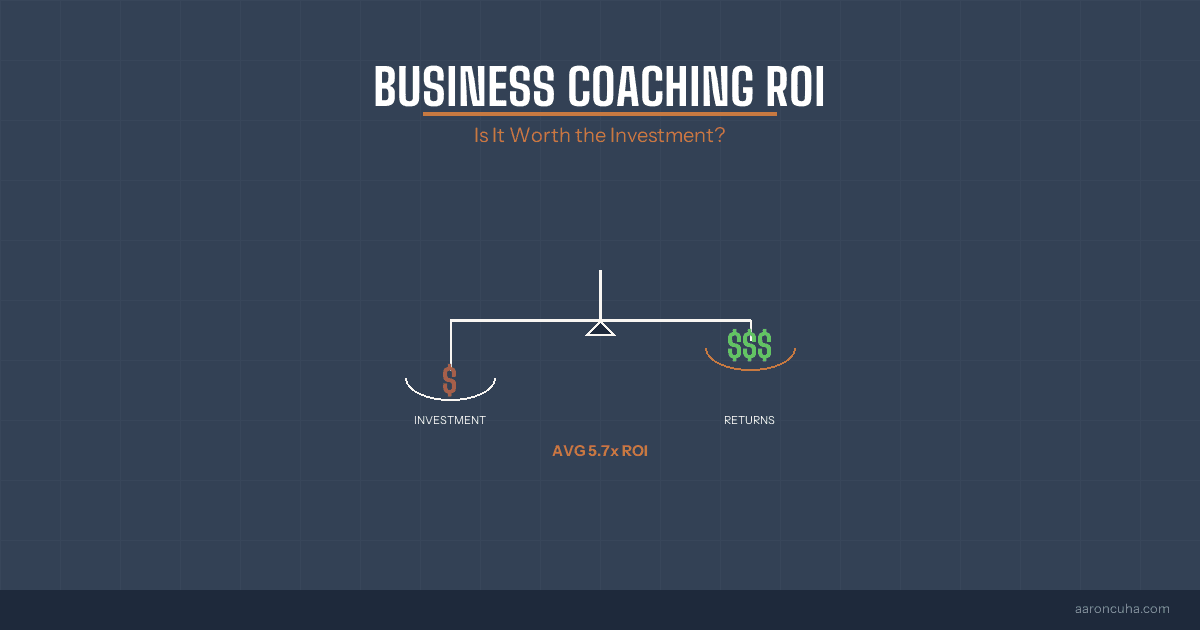
A good business coach should be able to demonstrate a clear path to 3x to 10x return on your coaching investment within the first 12 months. For a detailed breakdown of coaching returns, check my post on business coaching ROI.
Frameworks I Use with Every Client
Here are three frameworks from my business coaching for entrepreneurs that consistently deliver results:
The 90-Day Sprint: Break annual goals into 90-day sprints with 3 key objectives per sprint. This creates urgency without overwhelm and provides regular milestones to celebrate and adjust.
The Delegation Matrix: Categorize every task in your business by energy level (energizing vs. draining) and skill level (genius zone vs. competent). Delegate everything outside your genius zone. Most entrepreneurs are doing $20/hour tasks while their $500/hour work goes undone.
The Revenue Architecture: Map every step of your revenue generation process — from awareness to close. Identify the bottleneck (there is always one) and focus all resources on removing it. Do not try to fix everything at once. Fix the constraint.
How to Find the Right Business Coach
If you are considering business coaching for entrepreneurs, here is how to find the right fit:
- Consume their content: Watch their YouTube videos, read their blog, listen to their podcast. Do you resonate with their perspective?
- Check credentials: ICF certification, relevant business experience, client testimonials with specific results.
- Have a discovery call: A good coach will offer a free initial conversation. Use it to assess chemistry and approach.
- Ask for references: Talk to past clients. Ask specifically about what changed in their business.
- Start with a short commitment: A 90-day engagement is enough to assess fit before committing to 12 months.
Business Coaching for Entrepreneurs: The Bottom Line
Business coaching for entrepreneurs works when it is specific, accountable, implemented through systems, and delivered by someone with genuine experience. It fails when it is generic, passive, and delivered by someone who has never been in the arena. Choose carefully, commit fully, and track your results.
If you are ready to explore business coaching, book a free strategy call. No pitch, no pressure — just an honest conversation about whether coaching is the right move for your business right now. You can also join the Systems Over Hustle community for a taste of my coaching style before committing to one-on-one work.
Frequently Asked Questions
How much does business coaching for entrepreneurs cost?
Ranges widely: group coaching runs $500 to $2,000 per month, one-on-one coaching runs $1,500 to $10,000+ per month. The right question is not "how much does it cost" but "what is the expected ROI?"
How do I know if I am ready for a business coach?
You are ready if you have a business generating revenue, a specific challenge or goal you cannot solve alone, and the willingness to be held accountable. You are not ready if you are looking for someone else to do the work for you.
What is the difference between a business coach and a consultant?
A consultant tells you what to do. A coach helps you figure out what to do and holds you accountable for doing it. Both are valuable, but coaching creates more lasting change because the insights come from you.
Can I get results from coaching without a big budget?
Yes. Group coaching and communities like Systems Over Hustle offer coaching at a fraction of one-on-one pricing. Books like Crazy Simple YouTube provide frameworks you can implement independently.
How often should I meet with my business coach?
Weekly or biweekly sessions are standard. More frequent than weekly can create dependency; less frequent than biweekly loses momentum. The right cadence depends on your goals and stage of business.

Written by
Aaron CuhaAuthor of Crazy Simple YouTube, keynote speaker, and executive coach with 20,000+ hours logged. ICF PCC, NLP Master Practitioner, and DISC Certified. Aaron helps entrepreneurs replace hustle with AI-powered systems that generate leads, content, and revenue on autopilot.