The number one reason coaches struggle is not skill. It is a niche problem. Here is the exact framework I use to help coaches find a niche that attracts premium clients and repels tire-kickers.
After more than 20,000 hours of coaching and helping hundreds of coaches build profitable businesses, I can tell you the single biggest predictor of coaching success: niche clarity. It is not your certification. It is not your website. It is not your social media following. It is whether you can articulate, in one sentence, exactly who you help and what transformation you deliver.
Most coaches resist niching down because they are afraid of limiting their opportunities. The irony is that the opposite is true. A coach who helps "everyone with their mindset" competes with a million other coaches. A coach who helps "SaaS founders navigate the transition from IC to CEO" has a line of qualified clients at the door. Specificity is not a limitation — it is a competitive advantage.
Why Your Niche Determines Your Income
The coaching industry generates over $20 billion annually, but the distribution of that revenue is wildly uneven. According to Coach Foundation data, the top 20 percent of coaches earn 80 percent of the industry's revenue. The difference between the top 20 percent and everyone else is almost always niche positioning.
Here is why niche matters for your income:
- Premium pricing. Specialists command higher fees than generalists. A leadership coach charges $200 per hour. A coach who specializes in helping first-time CTOs at Series B startups charges $500 to $1,000 per hour because they solve a specific, high-stakes problem.
- Easier marketing. When you know exactly who you serve, you know where they hang out, what they read, what they search for, and what language resonates with them. Your marketing becomes surgical instead of scattered.
- Referral magnetism. People do not refer "a great coach." They refer "the person you need to talk to about X." A clear niche makes you referable. Join our Systems Over Hustle community to see how niche coaches build referral engines.
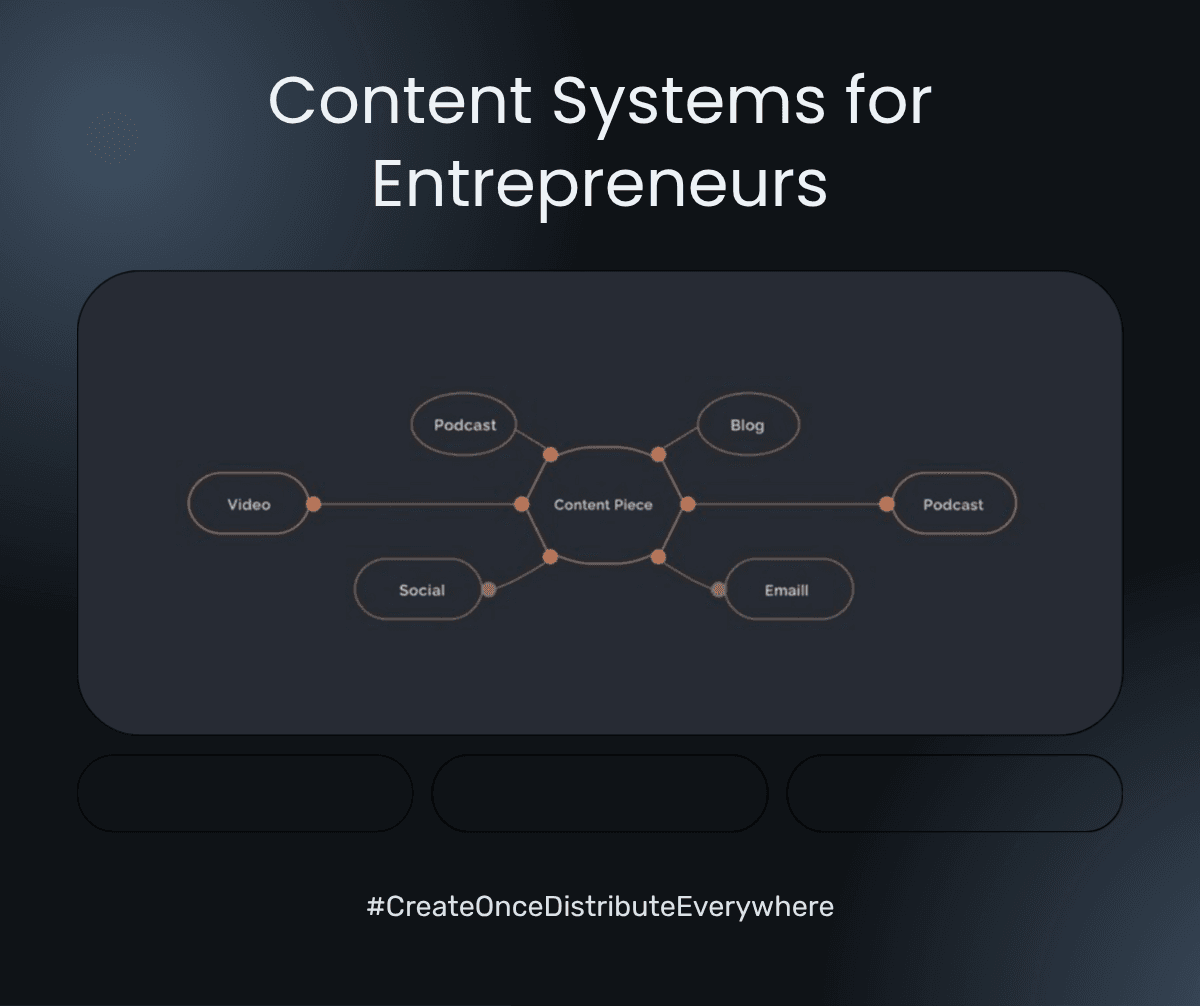
- Content clarity. Every piece of content you create speaks directly to your ideal client. No more guessing what to post. Your niche dictates your content strategy. I break down this principle in my content systems guide.

The Three-Circle Niche Framework
I use a framework with three overlapping circles. Your profitable niche lives at the intersection of all three:
Circle 1: Deep Expertise
What do you know better than most people? Not surface-level familiarity — deep, experiential expertise built through years of doing the work. For me, that is YouTube strategy and coaching business systems. I did not read about these topics — I lived them across 500+ channel optimizations and 20,000+ coaching hours as an ICF PCC-credentialed coach.
Write down every area where you have genuine depth. Past careers, specialized training, life experiences that gave you unique insight. Be honest about where your expertise is real versus aspirational.
Circle 2: Market Demand
Does anyone actually pay to solve this problem? This is where most coaches get stuck — they pick a niche they love but nobody will pay for. Validate demand before committing. Here are three ways to check:
- Search volume. Use Google Trends and YouTube search to see if people are actively looking for help with this topic.
- Competitor analysis. Are other coaches in this niche making money? Competition is a good sign — it means there is a market. No competition often means no demand.
- Willingness to pay. Does your target client have both the problem and the budget to solve it? Executive coaching pays well because executives have budget authority. Student life coaching is harder to monetize because students typically do not.
Circle 3: Energizing Work
Can you do this work for years without burning out? Coaching is intimate, repetitive work. You will have the same foundational conversations hundreds of times. If the topic does not genuinely energize you, burnout is inevitable — usually within 18 to 24 months.
The sweet spot is a niche where you have deep expertise, proven market demand, and genuine energy for the work. Miss any one of those three, and the business either stalls or you quit.
Profitable Coaching Niches in 2026
Based on what I am seeing in the market and through our executive coaching practice, here are the niches generating the highest revenue per coach in 2026:
- AI implementation coaching for business owners who need to integrate AI into their operations but do not know where to start
- Executive transition coaching for leaders moving from VP to C-suite or from corporate to entrepreneurship
- Revenue operations coaching for B2B founders scaling from $1M to $10M
- YouTube strategy coaching for professionals and business owners building authority channels
- Health optimization coaching for high-performing executives who want to sustain their performance long-term
- Sales coaching for consultants and coaches who struggle to close high-ticket deals
Notice what all of these have in common: they solve expensive problems for people with budget authority. That is the pattern. Your niche should target people who can and will pay premium prices for a real solution.
Crafting Your Niche Statement
Once you have identified your niche, articulate it with this formula:
"I help [specific person] achieve [specific outcome] through [your unique method]."
Examples:
- "I help SaaS founders build YouTube channels that generate 20+ qualified leads per month through my Authority Engine framework."
- "I help first-time female executives navigate the first 90 days in the C-suite through my Leadership Launch system."
- "I help burned-out agency owners productize their services and scale to $1M without adding headcount."
If your statement feels too broad — "I help entrepreneurs grow their business" — it is. Keep narrowing until it is specific enough that your ideal client reads it and thinks, "That is exactly what I need."
Five Niche Mistakes to Avoid
- Niching by modality instead of outcome. "I am a mindset coach" describes your method, not your client's result. Niche by the transformation, not the technique.
- Choosing a niche you have never worked in. Certifications do not equal expertise. Clients pay for lived experience and proven results, not theoretical knowledge.
- Picking a niche based on what is popular, not what you are great at. Trend-chasing leads to generic positioning. Your best niche is where your unique experience gives you an unfair advantage.
- Niching too broadly. "Business coaching" is not a niche. "Coaching for real estate team leaders scaling from 5 to 20 agents" is a niche.
- Never evolving your niche. Your niche should sharpen over time as you learn more about who you serve best and what outcomes you deliver most consistently. Revisit it quarterly.
How to Test Your Niche Before Committing
Do not spend months building a website and brand around an unvalidated niche. Test it first with these steps:
- Create 5 pieces of content. Blog posts, YouTube videos, or LinkedIn posts targeting your niche audience. Do people engage? Do they ask follow-up questions? Do they DM you?
- Have 10 conversations. Reach out to 10 people who fit your ideal client profile and offer a free strategy session. Do they show up? Are they excited? Would they pay for more?
- Make 3 offers. Pitch your coaching to 3 potential clients at your target price point. If at least 1 says yes, you have validation. If all 3 say no, adjust the offer or the niche.
This entire test takes 2 to 4 weeks. That is a small investment to validate a niche that will define your business for years. If you want guidance on finding and testing your niche, book a strategy call — I have done this exercise with hundreds of coaches and can shortcut the process significantly.
Frequently Asked Questions
What if I have multiple areas of expertise?
Pick one to lead with. You can always expand later, but trying to market multiple niches simultaneously dilutes your positioning. Choose the niche with the strongest overlap of expertise, demand, and energy. Build authority there first.
Is it too late to enter a competitive coaching niche?
No. Competition validates demand. The key is differentiation — your unique experience, methodology, or perspective that makes you the obvious choice for a specific subset of clients within that niche.
How long should I stay in a niche before pivoting?
Give a niche at least 6 months of focused effort before considering a pivot. Most coaches abandon niches too early because results take time to compound. If after 6 months you have zero traction despite consistent effort, then pivot.
Can I niche geographically?
Geographic niches work for coaches who serve location-dependent industries (real estate, local healthcare) or who prefer in-person coaching. For online coaching, geographic niches are usually too limiting. Niche by industry, role, or outcome instead.

Written by
Aaron CuhaAuthor of Crazy Simple YouTube, keynote speaker, and executive coach with 20,000+ hours logged. ICF PCC, NLP Master Practitioner, and DISC Certified. Aaron helps entrepreneurs replace hustle with AI-powered systems that generate leads, content, and revenue on autopilot.