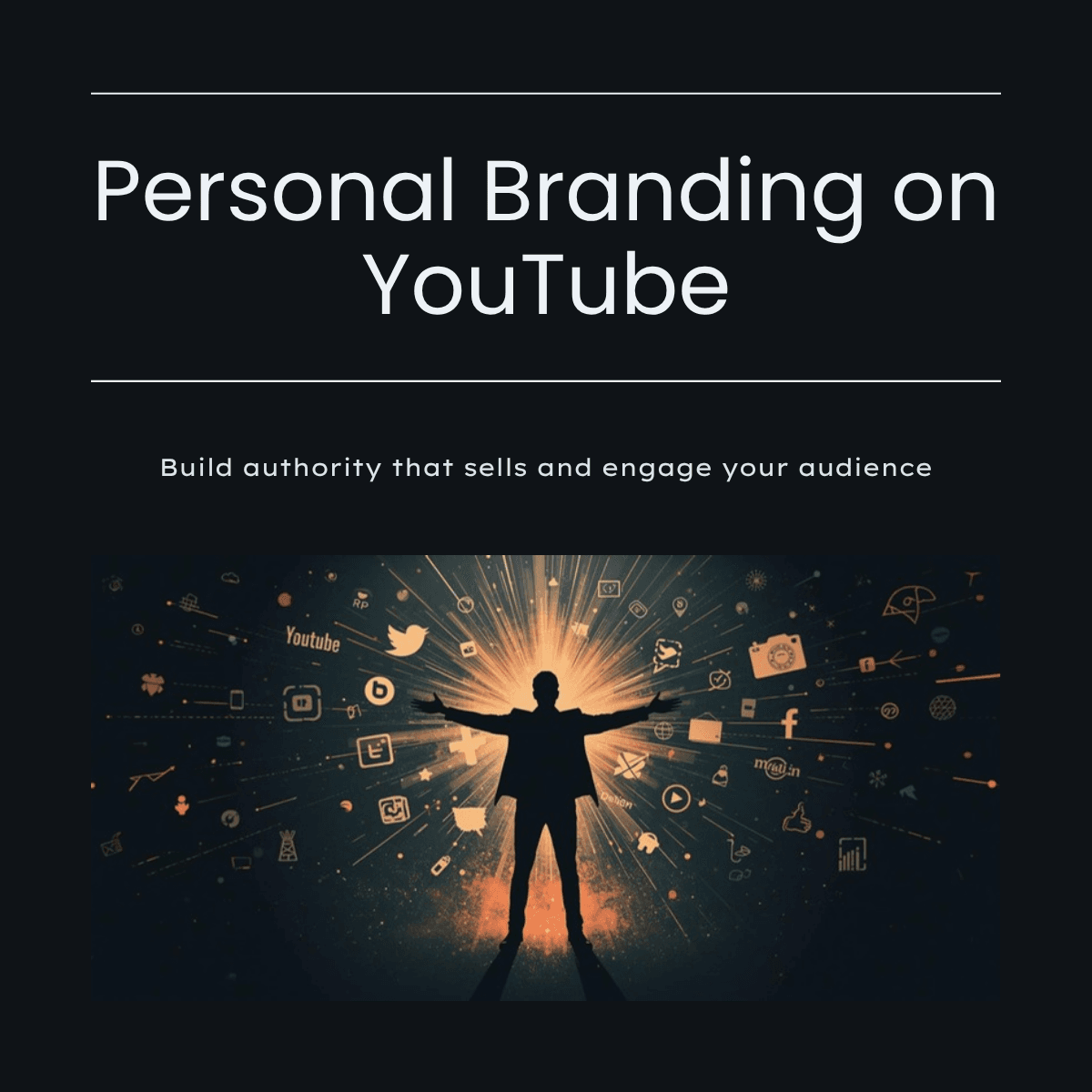
Your personal brand is your most valuable business asset. YouTube is the most powerful platform to build it. Here is how.
Personal branding on YouTube is the fastest path to becoming the recognized authority in your industry. When done right, your personal brand attracts clients, commands premium pricing, and creates opportunities that no amount of advertising can buy. According to Forbes, 82 percent of consumers trust a company more when its leadership has a strong personal brand. YouTube is the platform that builds that brand fastest because video creates connection at scale.
I have built my personal brand on YouTube from zero — twice. Once before 2008, when I was running a 300-branch mortgage company and building my first presence. And again after spending 10 years in Nepal, when I had to rebuild everything from scratch. Personal branding on YouTube is not about being famous. It is about being known by the right people for solving a specific problem.
Defining Your Brand Position
Your personal brand is not a logo or color scheme. It is the answer to one question: "What does [your name] help people do?" If you cannot answer that in one sentence, you do not have a brand position yet.
Here is how to define your personal brand position for YouTube:
- Expertise: What do you know better than most people? (My answer: YouTube strategy and business systems)
- Audience: Who specifically do you serve? (My answer: entrepreneurs and coaches)
- Outcome: What result do you deliver? (My answer: more leads, more revenue, less hustle)
- Method: How do you deliver it differently? (My answer: Systems Over Hustle — repeatable frameworks, not guesswork)
Your brand position formula: "I help [audience] achieve [outcome] through [method]." Everything on your YouTube channel flows from this positioning. Learn more about niche positioning in my post on why most YouTube channels fail.
Content Pillars for Personal Branding
Your content pillars are the three to five topics you consistently create content about. They should directly support your brand position. For me, my content pillars are:

- YouTube growth strategy
- Business systems and automation
- Executive coaching and leadership
- AI tools for entrepreneurs
- Personal development and mindset
Every video you publish should fit within one of your content pillars. This creates topical authority with YouTube's algorithm and mental consistency with your audience. When someone thinks about your topic, your name should come to mind. That is what personal branding on YouTube achieves when done consistently.
Balancing Authenticity and Authority
The biggest mistake in personal branding on YouTube is trying to be someone you are not. Your audience can spot inauthenticity from a mile away. Here is how to be authentically authoritative:
- Share your real story: Including the failures. I talk openly about losing everything in 2008 and spending a decade in Nepal. That vulnerability creates deeper connection than any polished pitch.
- Have strong opinions: Thought leaders take positions. If you agree with everyone, you stand for nothing. My position is clear: "Systems Over Hustle." Not everyone agrees, and that is the point.
- Teach from experience: Do not just cite research (though that is important too). Share what you have personally seen work across 20,000+ hours of coaching.
- Admit what you do not know: Nothing builds trust faster than honesty about the limits of your expertise.
According to HubSpot, 90 percent of consumers say authenticity is important when deciding which brands they like and support. On YouTube, authenticity is not optional — it is required.
Visual Brand Consistency on YouTube
While personal branding is not about visuals, visual consistency reinforces recognition:
- Thumbnail style: Use consistent colors, fonts, and layouts. Viewers should recognize your thumbnails before reading the title. See my thumbnail tips for the complete system.
- Video intro: A brief, consistent intro (under 5 seconds) builds brand recognition
- Color palette: Use 2 to 3 brand colors consistently across thumbnails, graphics, and your set
- Set design: Your background communicates your brand. Keep it consistent and intentional.
Brand Storytelling on YouTube
Stories are how humans process information and build emotional connections. On YouTube, your personal brand stories should include:
- Origin story: How did you get into your field? What challenges did you overcome? My story — from the Carlyle Group and Fiserv to building a 300-branch company to losing everything and rebuilding in Nepal — gives people context for why I think the way I do.
- Client stories: Show the transformation you create. "I worked with a real estate agent who went from zero to 50 leads per month using YouTube" is more powerful than "YouTube works for real estate."
- Lesson stories: Share specific moments that taught you something. These micro-stories make your teaching memorable.
- Vision stories: Where are you going? What do you believe about the future? People follow leaders with vision.
Monetizing Your Personal Brand on YouTube
A strong personal brand on YouTube creates multiple revenue streams:
- High-ticket coaching and consulting: Your brand justifies premium pricing. Through our executive coaching, we help leaders build the systems and mindset for scale.
- Courses and digital products: Your audience buys from you because they trust your expertise. Crazy Simple YouTube is an example of a book that extends the brand.
- Speaking engagements: YouTube is the best demo reel possible. Event organizers watch your videos before booking you.
- Community: Paid communities like my Systems Over Hustle group create recurring revenue from engaged followers.
- Partnerships and sponsorships: Brands pay to associate with established personal brands.
Five Personal Branding Mistakes to Avoid
I see these mistakes repeatedly with clients building their personal brand on YouTube:
- Trying to appeal to everyone: A brand that appeals to everyone appeals to no one. Be specific about who you serve.
- Inconsistent publishing: You cannot build a brand with sporadic content. Commit to a schedule and stick with it.
- Copying someone else's style: Be inspired by others, but develop your own voice. The market does not need another copy.
- Ignoring engagement: A personal brand is built through relationships, not broadcasts. Reply to comments. Engage with your community.
- Waiting until you feel ready: You will never feel ready. Start now and improve as you go. The person you become through the process is the brand.
Building Your Personal Brand on YouTube
Personal branding on YouTube is the highest-leverage activity available to coaches, consultants, and entrepreneurs. Every video you publish compounds your authority, attracts your ideal clients, and creates opportunities you cannot predict. The key is consistency, authenticity, and a clear brand position that tells the market exactly who you are and how you help.
Start with your brand positioning statement, define your content pillars, and commit to publishing weekly. For hands-on guidance, book a strategy call or sign up for our newsletter where I share personal branding strategies weekly.
Frequently Asked Questions
How long does it take to build a personal brand on YouTube?
You can establish initial recognition within 90 days of consistent publishing. Building a strong, recognized brand typically takes 12 to 24 months of weekly content. The key is consistency — the compound effect rewards patience.
Do I need to be an extrovert to build a personal brand on YouTube?
No. Many successful YouTube personal brands are built by introverts who are passionate about their subject. Authenticity matters more than personality type.
Should I use my personal name or a business name for my YouTube channel?
For personal branding, use your name. You are the brand. A business name creates separation between you and your audience that works against personal connection.
How do I handle negative comments that could hurt my personal brand?
Address legitimate criticism with grace. Ignore trolls. Your response to negativity often strengthens your brand more than the criticism weakens it.
Can I build a personal brand on YouTube in a competitive niche?
Yes. Competition validates demand. Your unique combination of experience, perspective, and personality is impossible to replicate. Focus on what makes you different, not what makes you similar.

Written by
Aaron CuhaAuthor of Crazy Simple YouTube, keynote speaker, and executive coach with 20,000+ hours logged. ICF PCC, NLP Master Practitioner, and DISC Certified. Aaron helps entrepreneurs replace hustle with AI-powered systems that generate leads, content, and revenue on autopilot.